Routine semen analysis
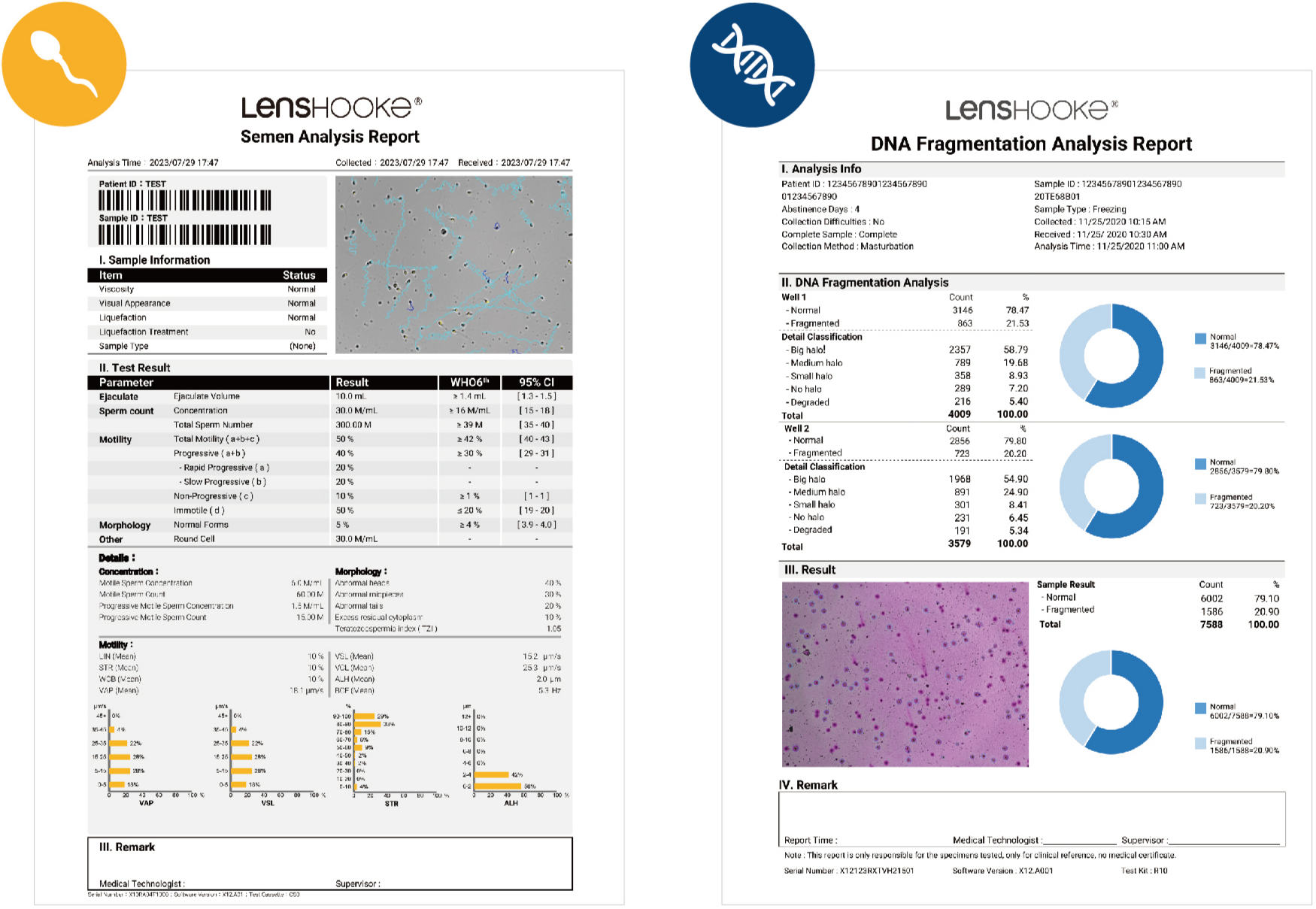
The image analysis calculates concentration, motility and movement paths, and classifies sperm morphology within the laboratory’s validated workflow.
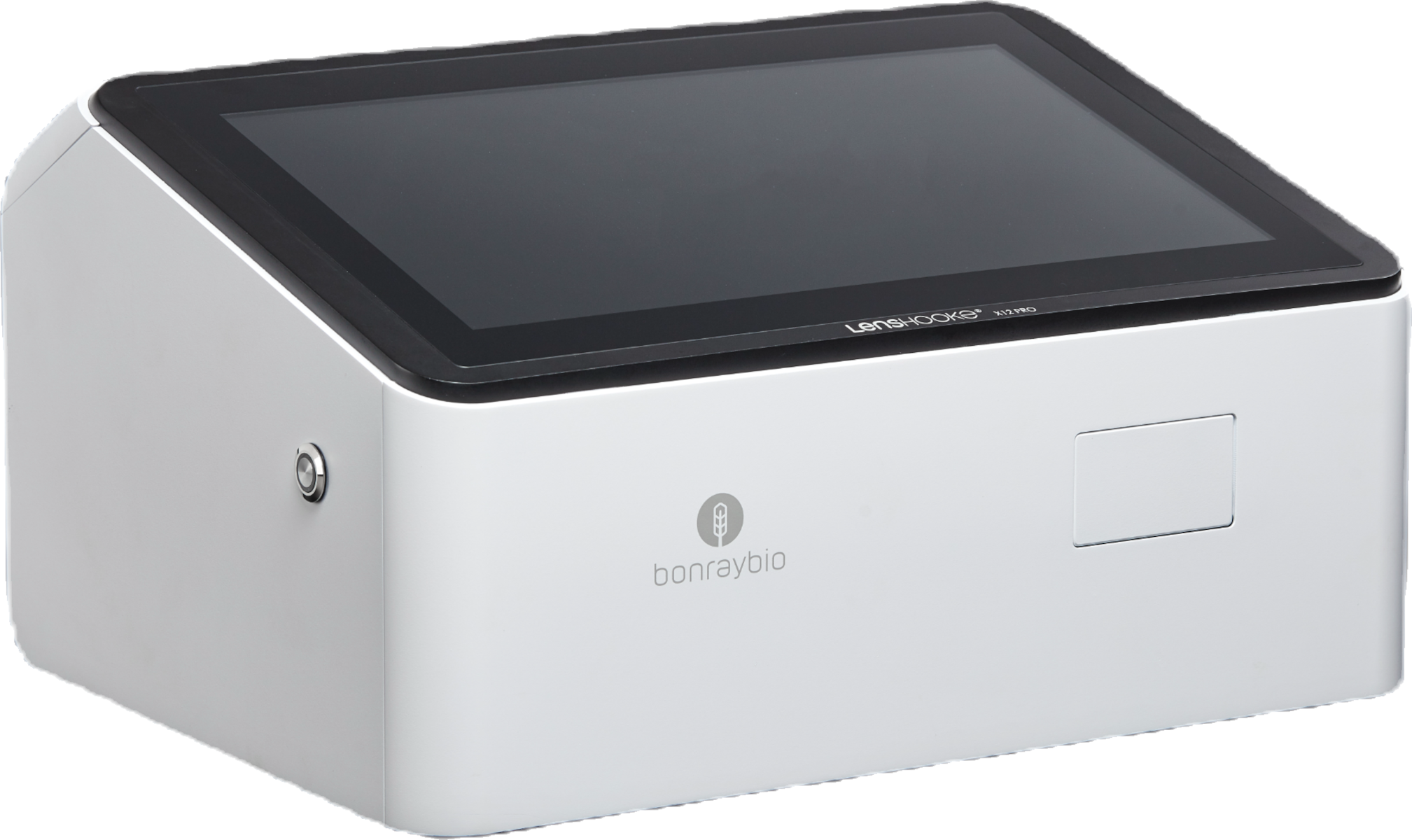
The flagship for the andrology lab. Advanced CASA semen analysis with Total and Double-strand DNA fragmentation, automated morphology analysis, autofocus, Full HD and an automatic XY table - in a compact benchtop unit.
Autofocus, Full HD optics and the automatic XY table capture the sample across multiple fields of view.
The image analysis identifies sperm and calculates concentration, motility and movement paths.
The system classifies morphology and compiles results from routine analysis and compatible R10 and R11 slides.
LensHooke X12 Pro combines autofocus, Full HD optics and an automatic XY table to analyse the sample across multiple fields of view. The same platform supports routine analysis and DNA fragmentation workflows using R10 and R11 slides.
The image analysis calculates concentration, motility and movement paths, and classifies sperm morphology within the laboratory’s validated workflow.
Autofocus and multiple fields of view provide a standardised image stream for sperm detection and classification.
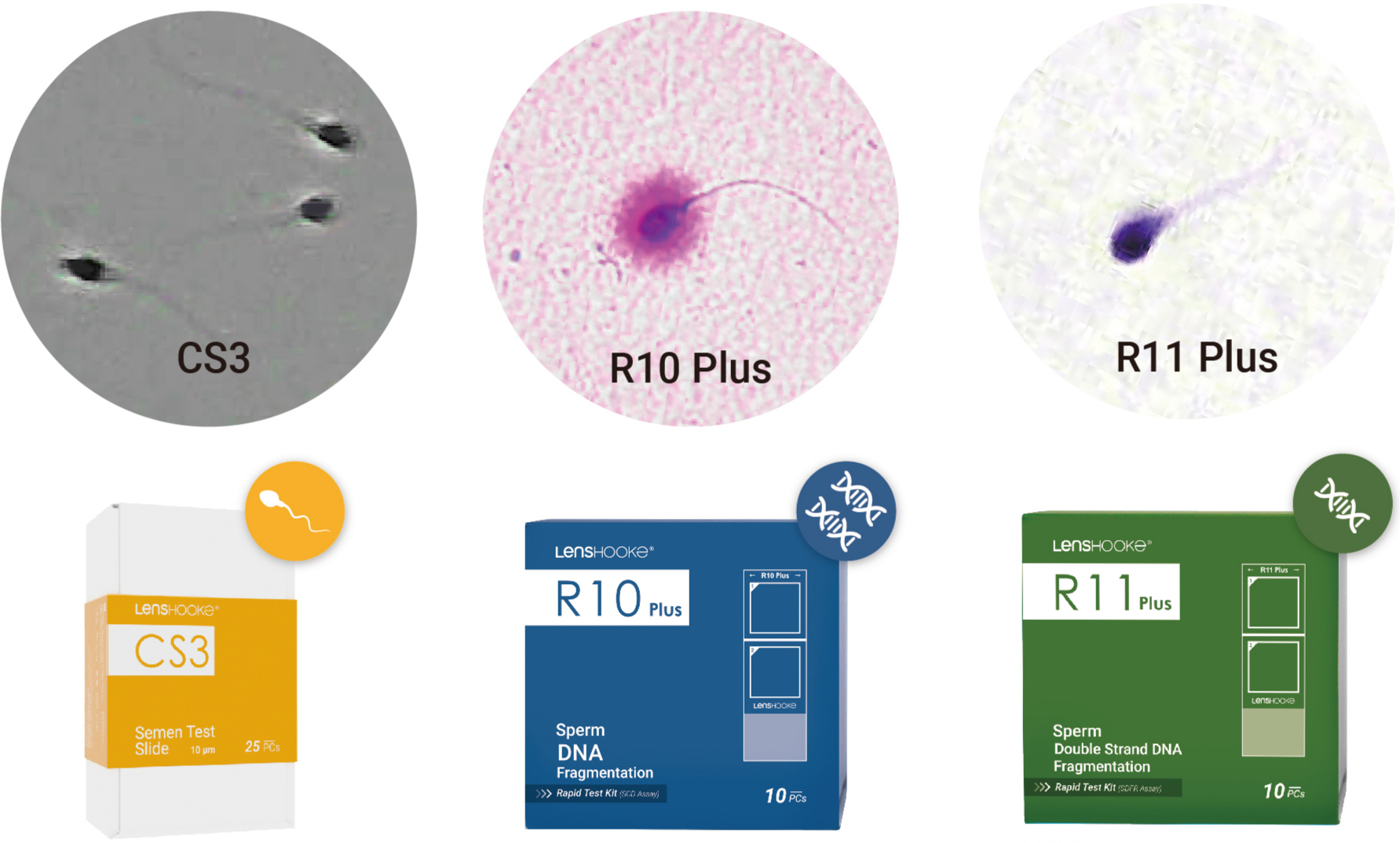
With R10 Plus, sperm chromatin dispersion and the DNA fragmentation index (DFI) can be analysed automatically by X12 Pro.
With R11 Plus, the laboratory can complement global DNA fragmentation with analysis of DNA double-strand breaks.
The WHO sixth edition manual emphasises standardised laboratory procedures, quality assurance and comparability between laboratories. For X12 Pro, published evidence covers automated R10 analysis of sperm DNA fragmentation.
A published study compared R10 with conventional SCD analysis and used X12 Pro for automated determination of the DNA fragmentation index.
X12 interpretation showed Spearman’s rank correlation ρ = 0.9323 against manual interpretation (p < 0.0001).
The coefficient of variation was 4% for R10 analysed by X12, compared with 19% for manual R10 scoring and 25% for manual G2 scoring.
The study primarily concerns R10/SCD and should not be presented as a separate validation of every parameter or every R11 workflow.
| Analysis time | 3–6 minutes per sample |
| Detection | At least 1,500 sperm per sample |
| Optics | Autofocus and Full HD |
| Sample table | Automatic XY table |
| Parameters | 9+ (concentration, motility A–D, morphology, DNA fragmentation, SDFR, round cells) |
| Standard | WHO 6 (2021) |
| Slides | CS3, R10 Plus, R11 Plus |
| Connectivity | LAN-Ethernet, USB |
| Export | PDF, CSV, API |
| CE marking | IVD |
| ISO | 13485 |
| Dimensions | 370 × 281 × 204 mm |
| Weight | 11 ± 0.5 kg |
| Power | 100–240 V AC, 50/60 Hz |
| Operating environment | 15–30 °C, < 70% relative humidity |
| Storage environment | 15–38 °C, < 70% relative humidity |
| Transport environment | −10 to 60 °C, < 70% relative humidity |
| Internal storage | 5,000 records including data and images |
X12 Pro combines advanced routine analysis with automated morphology, autofocus, Full HD image capture and workflows for SCD- and SDFR-based DNA analysis.
With compatible R10 and R11 slides, X12 Pro can be used for the DNA fragmentation index (SCD) and analysis of DNA double-strand breaks (SDFR).
The R10 slide is analysed optically, and X12 Pro automates determination of the DNA fragmentation index within the validated R10 workflow.
X12 Pro is intended for a workflow based on the sixth edition of the WHO manual. The laboratory must also maintain its own validated procedures, quality assurance and reference handling.
Book a demonstration - we can come to you or run a video call with live analysis.